
Reviewed · GRAN CANARIA
Guided tour of the Banana World
Gran Canaria’s banana story comes alive on this short visit to a working farm near Arucas. You’ll walk among banana plants, learn how the fruit is grown, and enter a restored Canarian house from 1804 that now serves as an interpretation center and shop.
I like the low price, about $18.14, and the generous tasting at the end. Banana wine, jams, banana with cactus, and banana with aloe vera turn a basic farm visit into something you can taste as well as see. I also like the friendly, playful guiding style reported from guides such as John, Dani, Fatima, Maria, Ion, Steven, Steve, and JC.
The main caution is group size. The official maximum is 40 people, and that is a lot for one guide in a small farm setting. Meeting instructions can also be unclear, so go straight to the shop or entrance rather than waiting at a map pin.
Key points before you book
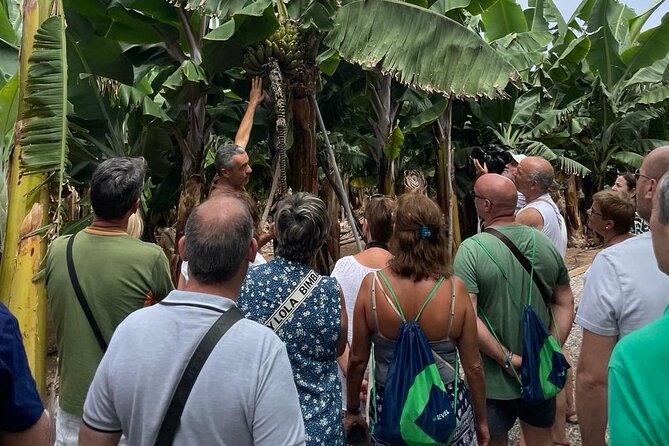
- A working banana farm near Arucas: See how bananas are cultivated and ask questions as you walk through part of the plantation.
- An 1804 Canarian house: The restored building holds the interpretation center, tasting area, and shop.
- Banana wine and local snacks included: Tastings feature banana-based drinks, jams, montaditos, and other island products.
- Short but information-packed: Allow roughly 45 minutes to one hour for the guided portion, with time afterward to browse.
- English-language guiding: The tour is offered in English, with guides including John, Dani, Fatima, Maria, Ion, Steven, Steve, and JC.
- Easy by car, possible by bus: Parking is included, but the final walk from the bus stop takes about 10 to 15 minutes.
What the Banana World visit is really about
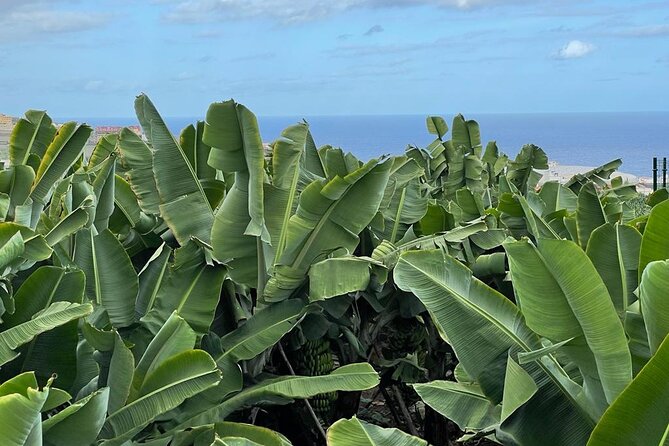
This is not a grand museum with acres of displays. It is a small-scale farm visit built around one crop that has shaped daily life and trade in the Canary Islands. The charm comes from seeing banana plants in the ground, hearing how they are grown, and then tasting products made from the fruit.
The tour takes place in Trasmontaña, near Arucas. The visit lasts about 50 minutes to one hour, though some groups finish in around 40 to 45 minutes. That makes it easy to fit into a day based around Las Palmas, Arucas, or a cruise stop, but you should not expect a half-day farm expedition.
I like the way the visit joins practical farming with local food. You are not simply told that bananas are important. You see the plants, hear about cultivation, visit an old Canarian home, and then sample banana wine and preserves. For about $18, that is a fair package, especially if you enjoy food-based stops and small local attractions.
The activity is offered in English. Different guides lead different departures, and the names attached to particularly well-liked tours include John, Dani, Fatima, Ismael, Ion, Maria, Steven, Steve, and JC. The exact guide is not guaranteed, but the repeated praise for the team points to a relaxed style with humor, questions, and plenty of basic farming information.
A few more Gran Canaria trips worth a look
- Maspalomas: Guided Camel Ride in the Maspalomas Sand Dunes
★ 4.4 · 3,690 reviews - Gran Canaria Guided Buggy Tour
★ 4.7 · 1,743 reviews - Gran Canaria: Rural Villages Guided Sightseeing Tour
★ 4.6 · 544 reviews
Walking through the banana plantation
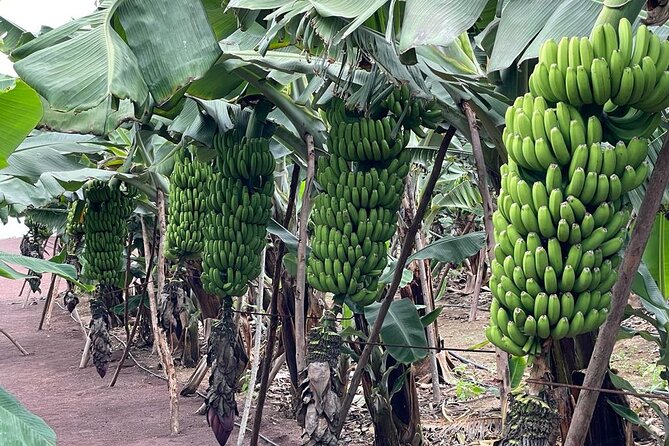
The first part takes you onto the farm, where the guide explains how bananas are cultivated. This is the heart of the visit. You’ll learn about banana plants and the work involved in growing the crop in the Canary Islands.
The supplied details do not give a full list of every subject covered, so do not book this expecting a formal agricultural class. Instead, think of it as a clear introduction for curious visitors. The guides explain the plants in plain English and leave room for questions.
That question time matters. A good farm tour is less about memorizing facts and more about being able to ask the obvious things you have always wondered. How does the plant grow? Which parts are harvested? How are different banana products made? The guides are praised for making room for this sort of conversation.
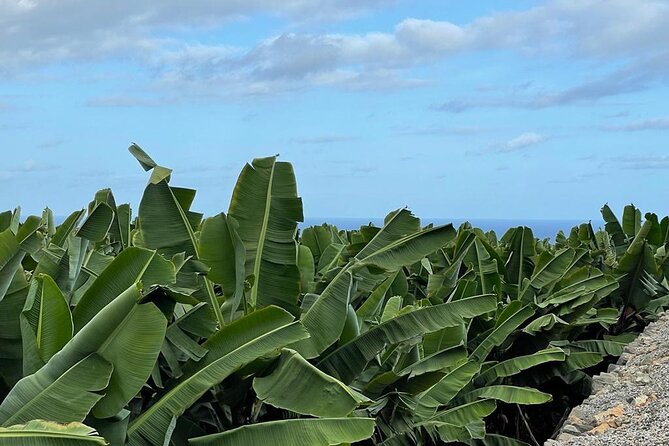
The plantation also gives you a change from the city. If you have spent several days around Las Palmas, the open farm setting and views near Arucas make a pleasant break. One guide-led visit was described as especially enjoyable because of the views and the chance to see different varieties of banana plants.
Still, keep your expectations realistic. You only walk through a small portion with the guide. Afterward, you may have access to more of the property on your own, but this is not an extended hike or a full farm workday. People looking for a brief, family-friendly outing will find the scale useful. Those wanting a long rural walk may find it too short.
Inside the restored 1804 Canarian house
The restored house is one of the more appealing details. Dating from 1804, it has been repaired while keeping its original architectural character. The building now contains the interpretation center and shop.
This gives the tour a sense of place that a modern visitor center would not provide. You are learning about banana farming inside an old Canarian home, rather than standing in a generic display hall. The house helps connect the crop to the island’s built environment and local traditions.
The interpretation center is described as new and informative. It adds structure to the farm visit, especially if you want more than a quick walk among plants. You can expect displays and explanations tied to bananas and their cultivation, though the supplied information does not specify the exact exhibits.
One reasonable criticism is that the visit could include more background on the history of banana cultivation in the Canary Islands. If that subject matters to you, ask the guide directly. The tour leaves room for questions, and a good guide can fill in some of the context that may not be covered in the main talk.
The tasting: banana wine, jams, and savory bites
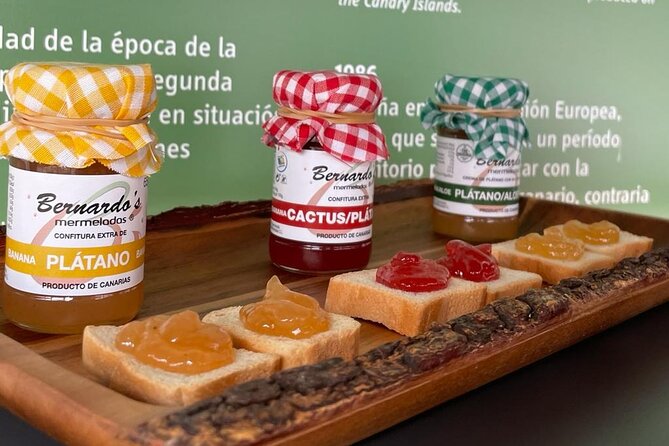
The tasting is a major part of the value. Included samples feature several types of banana-based wine made in the Canary Islands. You also receive small montaditos, or bite-sized open sandwiches, with banana jam, banana with cactus, and banana with aloe vera.
The tasting is not just a token sip. Several descriptions point to a good variety of jams, banana products, and drinks. Banana jam receives especially strong praise, and the shop sells additional products for taking home.
You may also see or taste banana-based sauces and other island-made items. Cosmetic products are sold too, including banana hand cream and other banana-themed lines. These are not included in the ticket, but they make the shop more interesting than a simple souvenir counter.
The banana wine is a fun talking point, especially for adults who enjoy trying local drinks. Alcoholic beverages are included, but coffee and tea are not. If you do not drink alcohol, the food samples and nonalcoholic products still give the tasting plenty of purpose.
There is one small practical issue at the tasting area. Some food and drinks may be laid out before the guide explains what is included. Go slowly and wait for instructions before helping yourself. That avoids confusion over which items are part of the formal tasting.
Same island, a completely different sort of day:
- Poema del Mar Skip-the-Line Ticket
★ 4.8 · 3,856 reviews - Puerto de Mogán: Submarine Tour
★ 4.4 · 3,792 reviews - From Puerto Rico de Gran Canaria: Dolphin Watching Cruise
★ 4.3 · 2,520 reviews - Gran Canaria: Dolphin and Whale Watching Cruise
★ 4.3 · 1,855 reviews
How long it takes and how the group size affects the visit
The advertised duration is about 50 minutes to one hour. Some departures last closer to 40 minutes, while others run for nearly an hour. The difference may depend on the guide, group questions, and the pace of the walk.
That short length is useful if you are fitting the visit into a busy day. You can combine it with time in Arucas or Las Palmas without giving up a full afternoon. On the other hand, the price is based on a compact experience, so you should not compare it with a long guided excursion.
The official group limit is 40 people. That is manageable in a larger outdoor area, but it can feel crowded around the guide or inside the old house. One poor experience involved more than 40 people and difficulty seeing and hearing the explanation.
I would try to arrive early and stay near the guide once the tour begins. If you have hearing concerns, are traveling with children, or want to ask many questions, a very large departure may be less comfortable. The tour works best when the guide can gather everyone close enough to hear.
The good news is that many guides are described as friendly, funny, and willing to answer questions. A guide such as Maria or Ion may make a large group feel more personal through direct questions and extra explanations. But group size remains the biggest variable you cannot fully control.
Getting there from Las Palmas and the cruise port
The meeting location is on Cam. del Laurel in the Arucas area. The information gives both number 7 and number 10 for the building, so check the exact entrance details before setting out. Once you arrive, go inside the shop or directly to the entrance and register.
Do not wait at a separate point outside if nobody is there. Several people had trouble because the map pin or meeting instructions did not lead directly to the shop. The safest practical advice is simple: head to the entrance area and ask the shop staff where the next English tour is gathering.
Driving is the easiest option. Parking fees are included, and most people with cars should find this more straightforward than arranging a bus connection.
Public transport is possible from Las Palmas. From near the cruise port, you can walk to the outbound stop for the blue 210 bus, listed as GLOBAL L210 Arucas, near Ambulatorio de Alcaravanera. Get off at El Lomito, then walk about 10 to 15 minutes to Cam. del Laurel.
The bus fare is about 1.50 euros per person and can be paid by cash or card. For the return journey, the 210 toward Las Palmas picks up across the street from the drop-off point.
A second option is to walk to Santa Catalina bus station, take a bus to Mesa y López, then transfer to the 210. This reduces some walking at the start but adds a connection. If you are visiting on a cruise, allow plenty of spare time. The bus route is doable, but the walk near the plantation is not ideal in every section, and buses may not be frequent.
Who will enjoy this most
I would recommend this for families, food lovers, and anyone who wants a short activity outside the city. Children can see the plants, sample unusual banana products, and ask questions without committing to a long museum visit. One family with a three-year-old found it to be a highlight, and another account specifically praised the way a nine-year-old was included.
It also suits adults who like local drinks and edible souvenirs. Banana wine, jam, sauces, and cosmetics make it easy to bring a small part of the visit home. The shop is especially useful if you want gifts that are more tied to Gran Canaria than standard tourist merchandise.
The tour is less suitable if you dislike group activities or need a quiet, slow-paced visit. A group of up to 40 can feel too large, and the tour covers only a small part of the farm. It may also disappoint anyone expecting a major museum or a detailed academic account of island agriculture.
The visit is generally accessible to most people, and most participants can take part. The supplied information does not give detailed mobility notes, so contact the provider if you need specific information about surfaces, steps, or the route inside the old house.
Is $18.14 good value?
At about $18.14 per person, I consider this good value if you use the tasting and take an interest in the farm setting. You receive an English-language guided visit, a look at banana cultivation, entry to the restored house and interpretation center, several food samples, banana wine tastings, and parking.
The price is especially fair for a family or for a short stop between other activities. You can finish the tour in under an hour and continue exploring the area. The shop adds value if you enjoy buying local food products, though purchases are extra.
The value is weaker if you have a long journey by public bus and only plan to stay for the formal talk. From some parts of the island, getting there can take much longer than the tour itself. In that case, combine it with other time in Arucas rather than making the trip for the plantation alone.
The overall score is 5 out of 5 from 3,431 ratings, with 99 percent recommending it. That strong response matches the main strengths: good guides, tasty samples, simple explanations, and a reasonable price. It does not erase the group-size and meeting-point issues, but it shows that the basic experience works well for most people.
Booking, weather, and cancellation details
You receive confirmation at booking, and the activity is usually booked about eight days ahead. Mobile tickets are accepted, and the tour is offered in English.
The experience depends on good weather. If poor weather causes cancellation, you will be offered another date or a full refund. You can cancel for a full refund up to 24 hours before the start time. Cancellations or changes made within 24 hours are not refunded or accepted.
I would book several days ahead if your schedule is fixed, especially if you are visiting on a cruise. Then check the start location again on the day and go straight to the shop or entrance.
Should you book the Banana World tour?
Book it if you want a short, affordable, food-focused look at Gran Canaria’s banana culture. The 1804 house, farm walk, friendly English guides, and tasting make it more interesting than a simple plantation photo stop.
Skip it if you want a long rural excursion, a small private group, or a full account of the island’s agricultural history. For everyone else, the price is modest enough that the main risk is not the ticket cost. It is spending too much time getting there by bus. If you are already near Las Palmas or Arucas, or you have a car, this is an easy choice.
FAQ
Where does the Banana World tour begin?
The tour begins at Cam. del Laurel in the Trasmontaña area of Arucas, Gran Canaria. The supplied address appears as both number 7 and number 10, so go directly to the shop or entrance and confirm the meeting point there.
How long does the tour last?
The visit usually lasts about 50 minutes to one hour. Some departures may be closer to 40 to 45 minutes.
Is the tour offered in English?
Yes. The activity is offered in English.
What will I see during the visit?
You will visit a banana farm, learn about cultivation, enter a restored Canarian house dating from 1804, and see the interpretation center and shop.
What food and drinks are included?
The included tasting features banana-based wines from the Canary Islands and small montaditos with banana jam, banana with cactus, and banana with aloe vera.
Is parking included?
Yes. Parking fees are included in the activity.
Is public transport available?
Yes. The blue 210 bus from Las Palmas can take you toward Arucas. The El Lomito stop is about a 10 to 15 minute walk from the tour location.
How large can the group be?
The maximum group size is 40 people. A group that large may make it harder to hear or see the guide in tighter areas.
Can children take part?
Most participants can take part, and the activity has been enjoyed by families with young children. The tour provider does not list a specific minimum age in the supplied information.
Can I cancel for a refund?
Yes. You can cancel at least 24 hours before the start time for a full refund. Cancellations within 24 hours are not refunded, and poor-weather cancellations offer either a different date or a full refund.
Just reviewed around Gran Canaria
- Custom Maspalomas Private Photo Shoot★ 5.0 · 7 reviews
- Sea and Mountain Full Day Tour with Lunch★ 4.0 · 5 reviews
- 6 Diving Sites Scuba Diving Package in Gran Canaria★ 5.0 · 6 reviews
- Kayak Gran Canaria★ 3.0 · 10 reviews
- Las Palmas Maspalomas Gran Canaria Salsa Lovers Dance Experience★ 5.0 · 3 reviews
- Las Palmas, Botanical Garden & Bandama Crater tour – Gran Canaria★ 4.5 · 27 reviews
- Experience the Thrill of Jet Skiing in Anfi del Mar★ 4.5 · 13 reviews
- Photoshoot at Dunas Maspalomas in Desert Beach Ocean View★ 5.0 · 9 reviews