
Reviewed · GRAN CANARIA WINE TASTINGS
Guided Tour at Ron Arehucas Distillery
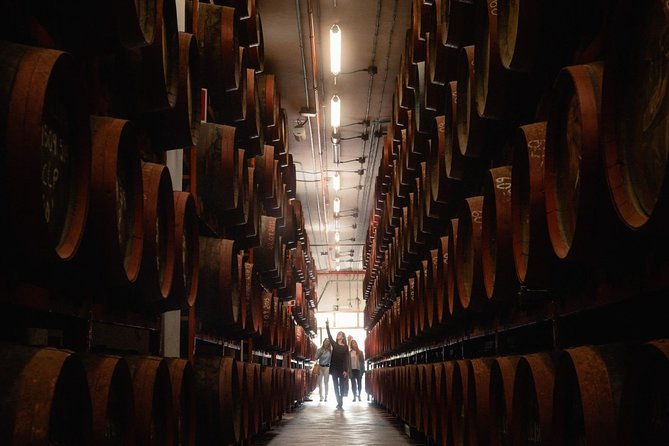
Arehucas saves its best moment for the end: a tasting of its rums and liqueurs after a short walk through the working distillery. The tour also takes you into one of Europe’s oldest rum cellars, where 4,308 American oak casks give the visit a strong sense of place.
I like the clear look at the full production chain, from the mill and fermentation rooms to the bottling plant. I also like the price, which makes this an easy addition to a day in Arucas, especially when the tasting includes several pours and the shop sells bottles and souvenirs at reasonable prices.
The main drawback is pace. Large groups can make the narrow areas hard to hear, and some guides move quickly through the machinery and production rooms. Treat this as a compact introduction to rum, not a slow, technical factory visit.
Key points to know before you go
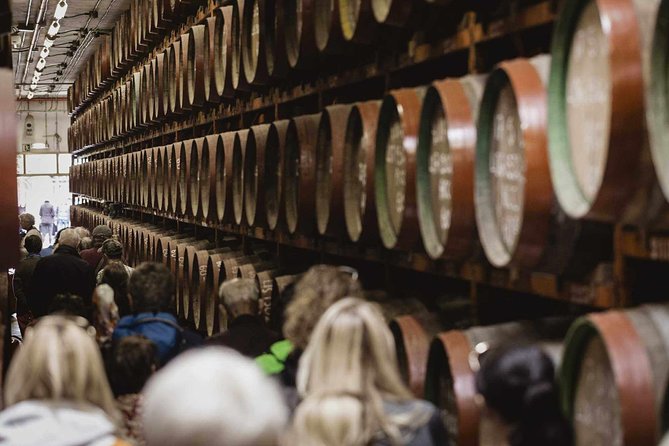
- The cellar holds 4,308 American oak casks: This is the most atmospheric part of the tour and gives you a clear idea of Arehucas’s scale.
- The visit follows five clear stages: You cover the company’s origins, ageing, production, bottling, and tasting in about one hour.
- The tasting is the main reward: Depending on the session, you may try four or more pours, including rum varieties, liqueurs, and rum honey.
- English is offered: Guides including Elena and Sofia have been praised for clear explanations, though hearing can be difficult in a large group.
- Arucas adds value to the outing: The town is worth pairing with the distillery instead of making the factory your only stop.
- Arrive early if driving: Parking near the distillery can be tight, and the visit starts at Destilerías Arehucas, Lugar Era de San Pedro, 2.
Entering Arehucas Distillery in Arucas
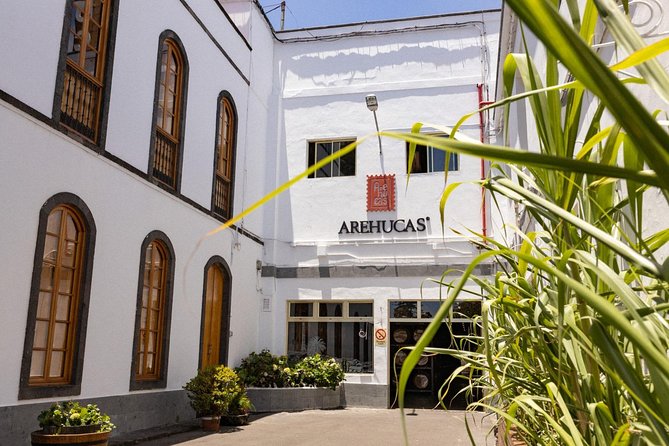
The tour begins directly at Destilerías Arehucas in Arucas, a town in Gran Canaria’s north. There is no transfer from another meeting point, so you make your own way to the entrance and finish back there.
That simple setup works well if you are already visiting Arucas. It is less convenient if you are driving only for the tour and arrive at the last minute. Parking can be difficult, so I would leave extra time rather than aim to arrive just before the start.
Public transportation is nearby, but the bus depot is not well signposted from the distillery. If you plan to arrive by taxi and leave by bus, check the route before the tour. The bus stop is around the corner, and finding it may take a little searching.
The booking information lists a mobile ticket, while the additional instructions say that only a paper ticket is accepted. I would bring a printed ticket to avoid any confusion at the entrance.
More tastings at Gran Canaria bodegas:
- Gran Canaria: Winery Tour, Wine Museum, and Tasting
★ 4.7 · 131 reviews - Banana Museum, Rum Distillery & Winery with Tasting: Premium tour
★ 4.5 · 62 reviews - 1h Boat Trip + 2h Dockside Local Wine & Food Tasting
★ 5.0 · 36 reviews
Stage one: the origins of Arehucas rum
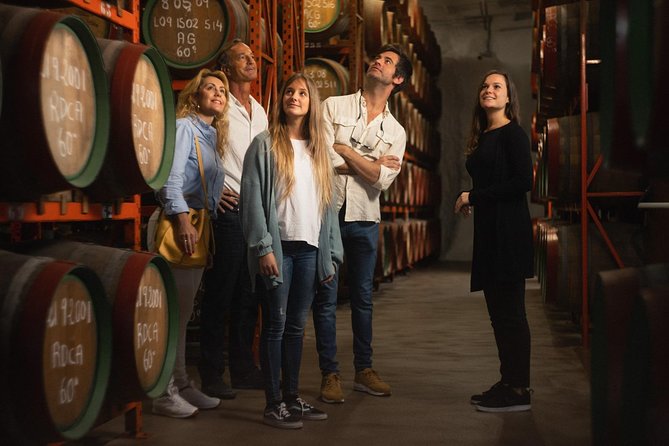
The first part introduces the origins of Arehucas and places the distillery in the wider story of rum in the Canary Islands. This is useful because the tour is not only about machinery. It explains why rum became part of local production and how the Arehucas name developed.
The history section is fairly short. You should expect a straightforward overview rather than a long talk about every stage of the company’s past. The quality can depend on the guide and the size of the group.
Guides such as Elena and Sofia have been singled out for being easy to understand and for keeping a sensible pace. Other sessions have felt more hurried, with a guide reciting prepared information and leaving little time for questions. If you are especially interested in the historical side, stay close to the guide and ask questions when the group pauses.
Stage two: the cellar with 4,308 oak casks
The ageing cellar is the tour’s most memorable space. It contains 4,308 American oak casks, creating row after row of barrels used in the rum ageing process.
This is where the visit feels most connected to the finished bottle. Instead of seeing only stainless-steel equipment, you get a clear visual sense of time, storage, and maturation. The cellar also gives the tour a traditional character that the bottling room alone would not provide.
The space can be narrow and long. In a group of up to 30 people, not everyone can stand close to the guide, so it may be hard to hear every word. I would move with the group rather than stop for long photographs, then use the tasting to ask about the products that interest you.
The cellar is also a good reason to visit even if you already know the basics of rum production. The scale of the cask collection gives you something tangible to remember from the tour.
Stage three: milling, fermentation, and distillation
Next, the guide explains how the rum is made and takes you through the mill, fermentation area, and distillation rooms. This is the part most useful to anyone who wants more than a tasting.
You will hear how the raw ingredients move through the process before the spirit is aged and bottled. The tour connects each room to the next, so you can follow the basic route from production to finished product.
The drawback is that the machinery may not be running during your visit. One practical comment from a past session was that the factory was more interesting in spring, when production could be seen in action. If you visit during a quiet period, you may look at the equipment without seeing the full process operating.
That does not make the stop pointless, but it changes your expectations. This is a guided explanation of rum production, supported by the rooms and machinery, rather than a guaranteed live demonstration.
Some people will want more technical detail about fermentation, yeast, and distillation. The standard one-hour format does not leave much room for a long discussion. The guide’s explanation gives you the essentials, but serious rum enthusiasts may find it brief.
A few more Gran Canaria trips worth a look
- Maspalomas: Guided Camel Ride in the Maspalomas Sand Dunes
★ 4.4 · 3,690 reviews - Guided tour of the Banana World
★ 5.0 · 3,431 reviews - Gran Canaria Guided Buggy Tour
★ 4.7 · 1,743 reviews - Gran Canaria: Rural Villages Guided Sightseeing Tour
★ 4.6 · 544 reviews
Stage four: the bottling plant
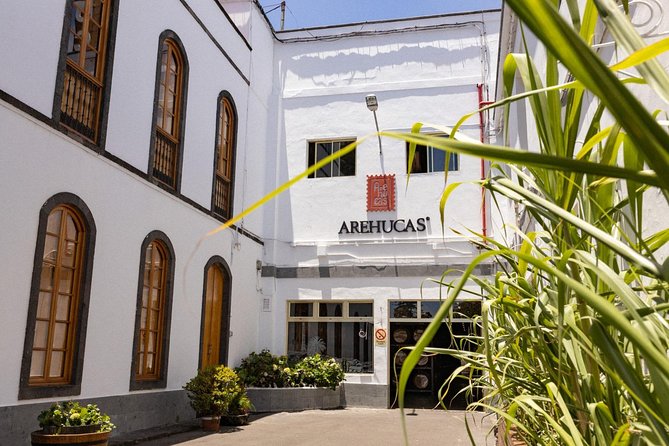
The bottling plant shows how the spirit becomes the product you see in shops and bars. It is a useful final step before the tasting because you have just followed the rum from production and ageing to its packaged form.
This area may feel less atmospheric than the old cellar. Still, it helps complete the picture. You can see that the distillery visit is not simply a historic display. It also covers the practical work required to prepare bottles for sale.
The tour moves briskly here. If you want time to study the equipment, you may need to do so while the group is moving. The format favors a general understanding of the process over close inspection of individual machines.
Stage five: tasting the rums and liqueurs
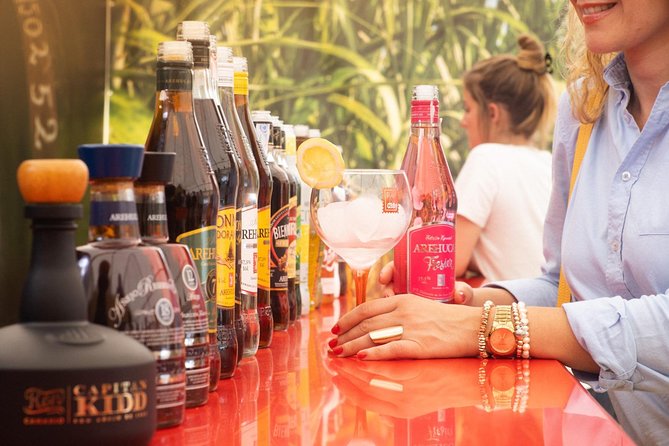
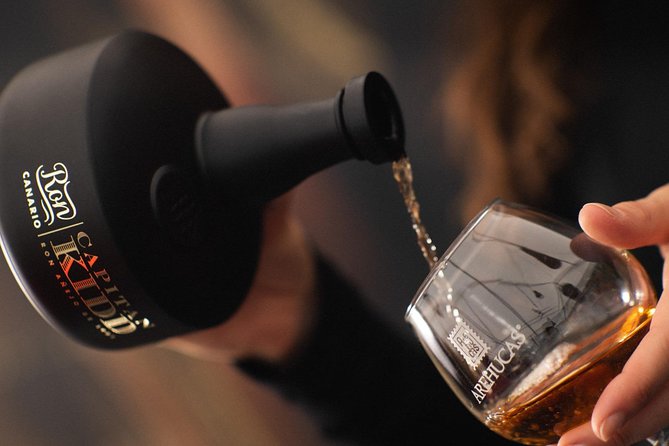
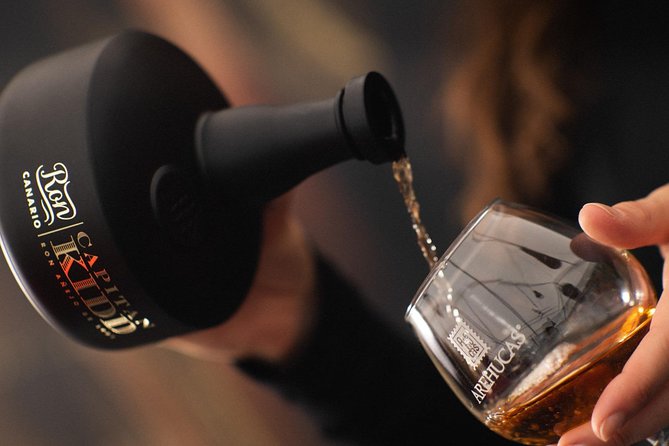
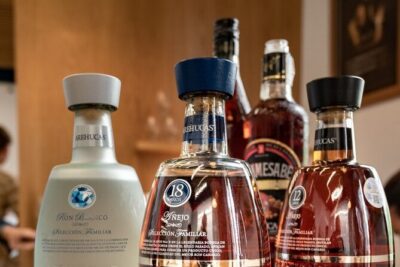
The tasting is the strongest part of the experience for many people. At the end, you sample a selection of Arehucas rums and liqueurs, with some sessions offering four pours and others presenting more than ten products.
The range can include different rum styles, fruit-based products, and rum honey. Rum honey is a particular favorite for many people who prefer a sweeter drink. The tasting gives you a better sense of the Arehucas range than choosing one bottle at random from a shop.
The pours are described as generous, which helps explain the strong value at the listed price of $13.31 per person. You receive a guided factory visit, access to the cellar and production rooms, and a tasting in one compact package.
There is one catch: the tasting can feel rushed when the group is large. You may not have much time to compare aromas, discuss the differences, or enjoy each pour slowly. If you want a relaxed tasting session, this may feel more like a guided sampling than a formal tasting class.
Do not arrive on an empty stomach. The tasting can include several alcoholic samples, and the session is not designed around a full meal or long breaks. Enjoy the products carefully, particularly if you are driving afterward.
The shop and buying Arehucas products
After the tasting, you can buy Arehucas bottles and other products at the distillery. This is a useful chance to choose something you have just tried instead of guessing from a shelf.
The shop also sells clothing and other branded goods. Past visitors have found the prices reasonable, and the selection can make the stop worthwhile if you want a practical souvenir from Gran Canaria.
You do not need to buy anything for the tour to feel complete. The shop is part of the natural finish to the visit, but the tasting remains the main reason to consider a purchase. If one liqueur or rum stands out, you can take home the exact product you sampled.
How the one-hour format affects the experience
The advertised duration is about one hour, divided across five stages. That makes the distillery easy to fit into a larger day, but it also explains why the tour can feel quick.
You are not spending long periods in any one room. The group needs to move through the cellar, production areas, and bottling plant before reaching the tasting. In narrow spaces, some people may fall behind or struggle to hear.
I would treat the pace as a benefit if you have limited time in Gran Canaria. You get the main facts, see the key areas, and taste a wide range of products without giving up half a day.
If you are passionate about industrial equipment or rum chemistry, the short format may leave you wanting more. Ask questions early, stay near the guide, and take notes during pauses rather than expecting a long question period at the end.
Is the $13.31 price good value?
At $13.31 per person, this is a strong-value cultural stop. The price covers the guided visit and tasting, and there is no separate admission charge at the distillery.
The value is best if you already plan to visit Arucas. You can combine the distillery with time in town and turn a one-hour activity into a fuller northern Gran Canaria outing. If you travel only for the tour, transport and parking become a larger part of the total cost.
The tasting is what makes the price especially appealing. Even a short explanation of rum production would be reasonably priced at this level, but several samples and the chance to buy products at the end add practical value.
You should not book it expecting a private tour, a slow tasting, or an advanced rum course. You are paying for an accessible introduction, a look inside an established distillery, and a generous sample of the product.
Who will enjoy this distillery visit?
I would recommend it to anyone who enjoys rum, local food and drink, or short cultural activities between sightseeing stops. It also suits couples and small groups who want something different from beaches and resort time.
Families can take part because most people can participate, but the tasting naturally matters more to adults. The tour is also a good choice for anyone visiting Arucas and wanting a reason to see more than the town center.
It may not suit you if you need a quiet, highly detailed technical tour. Group sizes can reach 30 people, and the guide may be difficult to hear in tight rooms. The experience works best when you accept its simple format and focus on the cellar, production story, and tasting.
The English option makes booking straightforward for English-speaking visitors. Other languages may be available in some sessions, but English is the language specifically offered here. Individual guides have varied in style, so the tone may be warm and detailed with one guide and more basic with another.
Booking, cancellation, and practical planning
Confirmation is provided at booking, and the activity is often reserved around 12 days ahead. That does not mean you must book weeks in advance, but it is sensible to reserve ahead if your Gran Canaria dates are fixed.
Free cancellation is available up to 24 hours before the start time. Cancellations or changes made inside that window are not refunded or accepted. The activity also depends on suitable weather and a minimum number of participants. If the operator cancels for either reason, you are offered another date, another activity, or a full refund.
The maximum group size is 30 people. That is large enough to affect how well you hear, especially in the narrow cellar and production areas. Arrive early, bring the required paper ticket, and allow extra time if you are driving.
Should you book the Arehucas Distillery tour?
Book it if you want a low-cost, one-hour introduction to Canary Islands rum, especially if you are already planning to visit Arucas. The 4,308-cask cellar, broad tasting, and shop make the experience more memorable than a simple factory talk.
Skip it if you want a quiet, highly technical visit with machinery running throughout. The group can be large, the explanations can be brief, and the tasting may feel rushed.
For most visitors, the value is clear. Pair the distillery with Arucas town, arrive early, stay near the guide, and treat the tasting as the highlight. That approach gives you the best version of this compact and affordable Gran Canaria outing.
FAQ
Where does the Arehucas Distillery tour begin?
It begins at Destilerías Arehucas, Lugar Era de San Pedro, 2, 35400 Arucas, Las Palmas, Spain.
Where does the tour end?
The activity ends back at the distillery meeting point.
How long does the tour last?
The guided visit lasts about one hour.
Is the tour offered in English?
Yes. English is one of the offered languages.
What does the tour include?
It includes an introduction to Arehucas, the ageing cellar, the mill, fermentation and distillation rooms, the bottling plant, and a tasting of rums and liqueurs.
How many casks are in the ageing cellar?
The cellar contains 4,308 American oak casks.
Can I buy Arehucas products after the tour?
Yes. Arehucas rums, liqueurs, and other products can be purchased at the end of the visit.
What is the maximum group size?
The tour can have a maximum of 30 participants.
Can I cancel for a full refund?
Yes, if you cancel at least 24 hours before the experience start time. Cancellations made less than 24 hours in advance are not refunded.
Just reviewed around Gran Canaria
- Custom Maspalomas Private Photo Shoot★ 5.0 · 7 reviews
- Sea and Mountain Full Day Tour with Lunch★ 4.0 · 5 reviews
- 6 Diving Sites Scuba Diving Package in Gran Canaria★ 5.0 · 6 reviews
- Kayak Gran Canaria★ 3.0 · 10 reviews
- Las Palmas Maspalomas Gran Canaria Salsa Lovers Dance Experience★ 5.0 · 3 reviews
- Las Palmas, Botanical Garden & Bandama Crater tour – Gran Canaria★ 4.5 · 27 reviews
- Experience the Thrill of Jet Skiing in Anfi del Mar★ 4.5 · 13 reviews
- Photoshoot at Dunas Maspalomas in Desert Beach Ocean View★ 5.0 · 9 reviews
Gran Canaria Wine Tastings, compared.
Banana Museum, Rum Distillery & Winery with Tasting: Premium tour
Read our review →
1h Boat Trip + 2h Dockside Local Wine & Food Tasting
Read our review →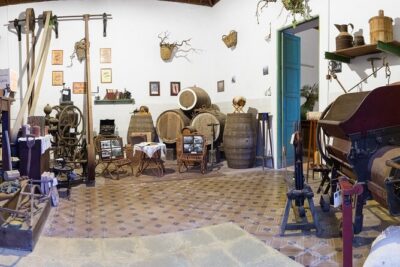
Winery Tour, Wine Museum, and Tasting in Gran Canaria
Read our review →
Gran Canaria Premium Tour: Volcanoes and Wine for cruisers
Read our review →
Gourmet Tapas and Wine Tour in the Old Town of Las Palmas
Read our review →Browse the lists this tour appears in