
Reviewed · GRAN CANARIA SCUBA DIVING
PADI Rescue Diver Course in Gran Canaria
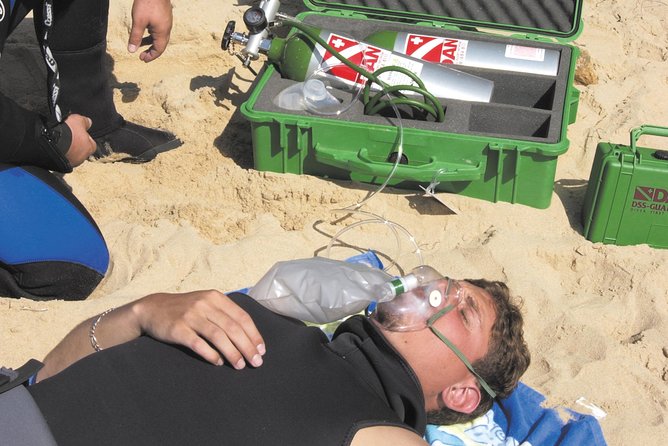
The useful thing about this PADI Rescue Diver Course is that it moves beyond basic underwater skills. You learn how to help an unresponsive diver, manage emergencies on the surface, and protect yourself first, all under the eye of a PADI-certified instructor. I like the small maximum of six people and the fact that the course uses both controlled practice and realistic rescue scenarios.
I also like the practical setup: hotel pickup and drop-off from selected Gran Canaria hotels, PADI materials and certification fees included, and insurance covered. The main consideration is time. Two days is a tight schedule for serious training, and you need an existing PADI Open Water certificate, reasonable fitness, and medical clearance to take part.
Key points at a glance
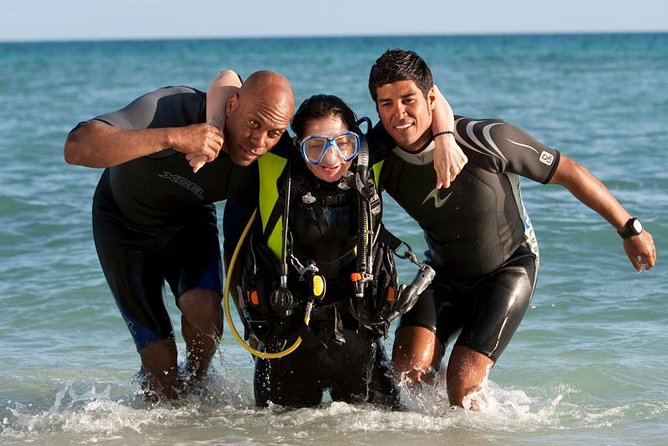
- Two days of focused rescue training: Learn self-rescue, surface response, and underwater assistance rather than simply adding another sightseeing activity.
- Amadores is the classroom: Day one uses the local bay or an onsite pool, while day two moves to Amadores Beach for two rescue scenarios.
- Small groups matter: The maximum group size is six, giving you more direct practice time with the instructor.
- Training is led by PADI professionals: Blue Water Diving instructors include Chris and Kate, names that appear often in the center’s course feedback.
- The price covers important extras: At $397.58 per person, the fee includes required PADI materials, certification fees, insurance, and selected hotel transfers.
- Plan around health and flights: You must complete a health questionnaire, show proof of certification, and avoid flying within 48 hours after the course.
Why this course is more than another certificate
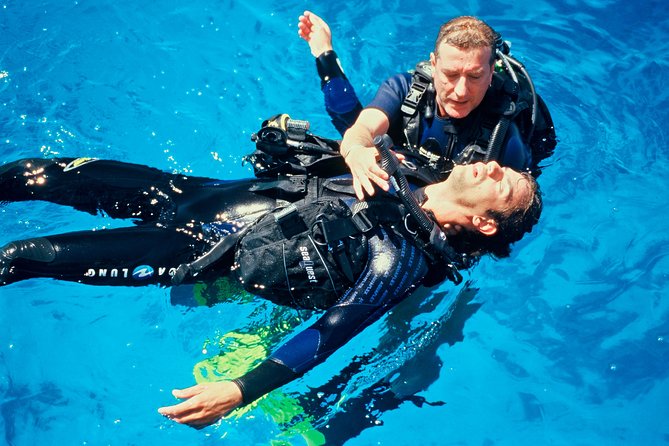
The PADI Rescue Diver course is designed for people who already hold PADI Open Water certification and want to become calmer and more useful in an emergency. It is not simply a scenic outing with a few extra skills added on. The focus is on recognizing trouble, handling an unresponsive person, and carrying out a rescue without creating a second casualty.
That last point is important. Rescue training begins with self-rescue, because panic, poor air management, disorientation, or equipment problems can affect you before anyone else. You then work on helping another diver underwater and at the surface. These are practical skills that can change how you think about every future underwater session.
I like the way this course divides classroom-style learning from hands-on work. You do not just listen to emergency procedures and then receive a certificate. You practice the actions in a controlled setting before taking on two larger scenarios at Amadores Beach.
The course is also a useful confidence test. If you are still uneasy with basic buoyancy, equipment handling, or staying calm underwater, this may feel demanding. If your Open Water course is fresh and you want to build sound habits, it can be the right next step.
More dive trips off Gran Canaria:
- Scuba Diving Experience for Beginners in Gran Canaria
★ 5.0 · 561 reviews - Gran Canaria: Try Scuba Diving for Beginners
★ 4.9 · 403 reviews - Beginners Scuba Diving Experience in Gran Canaria
★ 5.0 · 254 reviews
Day one at the bay or pool
The first day begins at 9:00 am. The meeting point is by the Euronet ATM at C. Doreste y Molina 18 in Puerto Rico, Las Palmas. Pickup and drop-off are available from selected hotels, so you should confirm that option when booking rather than assume every address is covered.
Day one is where the main rescue skills are shown and practiced. Depending on conditions and the plan for the day, the session takes place in the local bay at Amadores or in the onsite pool. The pool offers a controlled setting, while the bay gives you a more natural environment for applying the same procedures.
You learn how to deal with an unresponsive or unconscious diver both underwater and on the surface. That wording matters. The course is not limited to one type of incident, and you need to think differently when a person is still below the surface compared with someone already out of the water.
Expect the instructor to break each skill into manageable parts. You will work through the required procedures, repeat them, and get corrections along the way. The small group limit of six should help here. Rescue practice is much more useful when you have time to perform the skill yourself rather than watch someone else do it.
The bay or pool setting also reduces the pressure of a full scenario on the first day. You can concentrate on technique, communication, control, and safe movement before the second day asks you to combine those skills.
Day two at Amadores Beach
The second day heads to Amadores Beach for two rescue scenarios. This is the point where the training becomes more than a list of separate exercises. You need to respond in sequence, make decisions, and manage the situation with the skills practiced on day one.
The exact scenario details are not specified, so you should not expect a fixed script presented in advance. That is part of the value. Emergency response rarely follows a neat pattern, and the practical test asks you to bring together self-rescue, assistance, and surface procedures.
Amadores Beach provides a real outdoor setting, but it also means you should prepare for a more active day. You need a moderate level of physical fitness, and the course is not designed as a passive lesson. Rescue work can require effort, focus, and repeated practice.
I like this progression from pool or bay to beach. You first learn under controlled conditions, then apply the skills in a broader setting. It gives the two days a clear purpose instead of treating them as two identical sessions.
At the end of the course, the PADI certification fees are included. That makes the final cost easier to judge, since you are not adding a separate certification charge afterward.
What the instructors bring to the course
Blue Water Diving’s instruction team includes Chris and Kate. The available course feedback points to clear explanations, friendly communication, and strong support during rescue and Divemaster training. One account specifically describes Chris as professional and approachable during a Rescue Diver course, while other course participants praise the easy communication with Kate when arranging schedules and practical details.
Those details matter in rescue training. You need an instructor who can correct a mistake without making you afraid to repeat the skill. You also need clear instructions when the exercise becomes tiring or confusing.
The center’s wider training experience is another useful sign. The same team teaches Open Water, Advanced Open Water, Rescue Diver, Emergency First Response, and Divemaster programs. That does not guarantee a perfect fit for every person, but it suggests that the course sits within a broader training system rather than being a one-off lesson.
The group maximum of six is one of the strongest features. A smaller class does not remove the work you must do, but it should reduce idle time and give the instructor more chances to watch your technique.
Same island, a completely different sort of day:
- Poema del Mar Skip-the-Line Ticket
★ 4.8 · 3,856 reviews - Puerto de Mogán: Submarine Tour
★ 4.4 · 3,792 reviews - Maspalomas: Guided Camel Ride in the Maspalomas Sand Dunes
★ 4.4 · 3,690 reviews - Guided tour of the Banana World
★ 5.0 · 3,431 reviews
What the $397.58 price includes
At $397.58 per person, this course is not a cheap add-on to a beach holiday. It is a professional certification program spread over two days. The value depends on how seriously you want to develop your skills.
The fee includes:
- A professional guide
- Required PADI materials
- PADI certification fees
- Insurance
- Hotel pickup and drop-off from selected hotels
That list is important. Course materials and certification can add to the cost of training elsewhere, so their inclusion makes the advertised price more useful for comparison. Insurance is included as well, though you should still read the exact terms and complete the required health questionnaire honestly.
Food and drinks are not included. You should plan for your own refreshments during the two days. Since the activity starts at 9:00 am and involves practical work, arriving prepared is wiser than treating meals as an afterthought.
The included transfers may also save time and taxi costs, but they are limited to selected hotels. The official meeting point remains the Euronet ATM in Puerto Rico, so confirm the pickup arrangement before setting your morning plans.
Health, certification, and flight planning
You must show evidence of dive certification before taking part in this certified course. PADI Open Water certification is the stated entry requirement, so this is not a beginner lesson.
You also complete a health questionnaire before taking part. Conditions such as asthma or heart problems may prevent participation, and the course information advises consulting your doctor if you have a pre-existing medical condition. Take that advice seriously. Rescue training asks more of your body than a relaxed recreational session.
Flying needs careful planning. You should not fly within 48 hours after diving, so avoid placing this course immediately before your return flight. A two-day activity can affect more of your holiday schedule than the calendar suggests, especially if you need a buffer afterward.
Public transport is nearby, but the hotel transfer option may be easier if you are staying outside Puerto Rico. The activity returns to the meeting point at the end.
Who will get the most from it
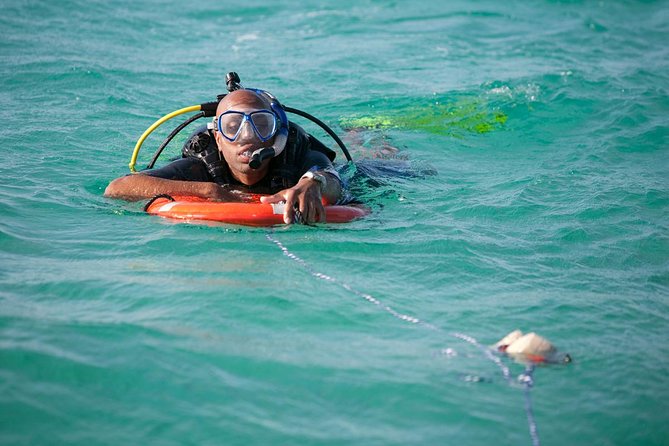
This course suits an Open Water-certified diver who wants more confidence and responsibility. It is especially useful if you plan to continue toward Advanced Open Water, Emergency First Response, or Divemaster training.
It also fits someone who wants practical skills rather than a scenic introduction. You will spend time learning procedures, repeating techniques, and completing rescue scenarios. The beach setting is attractive, but the main purpose is training.
I would think twice if you have just completed Open Water and still feel uncomfortable with basic control. Rescue training can expose weak habits, which is useful, but it may be stressful if you are not ready for the workload. Ask the provider about your experience level before booking if you are unsure.
It may also be a poor fit for a very tight holiday schedule. The advertised length is approximately two days, with a 9:00 am start, and flying restrictions can extend the time you need to keep free.
What the past course feedback tells me
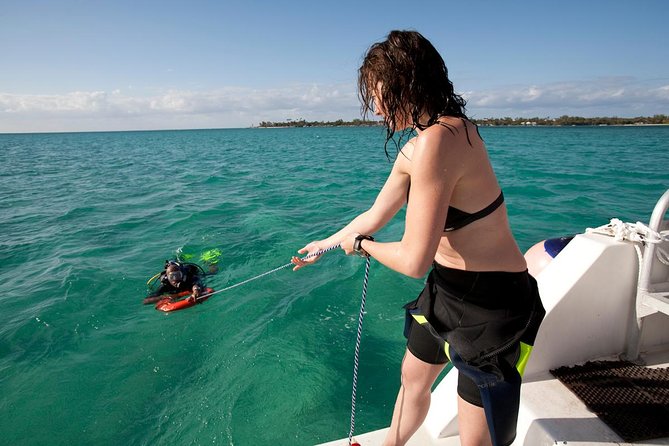
The strongest pattern in the available feedback is the quality of instruction and personal support. Chris is singled out for professional, friendly teaching during a Rescue Diver course. Kate receives praise for clear communication and handling arrangements.
The center also has repeat business from people who return for further courses, including Advanced Open Water, Rescue Diver, and Divemaster training. That suggests the team can support learners beyond a single beginner session.
Another useful detail is that some people have followed the instructors from Malaga to Gran Canaria for further training. I would not treat that as a promise of a particular teaching style, but it does indicate continuity for divers who want to keep working with the same team.
The feedback also describes equipment as being in good order and the atmosphere as welcoming. Still, you should remember that course experiences depend on weather, fitness, prior skill, and how comfortable you are under pressure. A positive training culture helps, but you still have to do the work.
Booking, cancellation, and practical limits
You receive confirmation at the time of booking. Free cancellation is available if you cancel at least 24 hours before the local start time. Cancellations inside that window are not refunded, and changes made within 24 hours are not accepted.
The experience has a maximum of six people. That is a useful limit for a skills-based course, but it does not mean every session will feel private. You will still share instruction and practice time with the group.
Hotel transfers are included only for selected hotels. If your hotel is not covered, use the Puerto Rico meeting point listed above and allow enough time to arrive before 9:00 am.
You should bring a practical attitude, proof of your certification, and enough time for the course and the post-course flight restriction. Food and drinks are your responsibility.
Should you book the Gran Canaria Rescue Diver Course?
Book it if you already hold PADI Open Water certification and want serious emergency training in a small group. The two-day structure, included PADI fees, insurance, practical scenarios, and access to instructors such as Chris and Kate make the $397.58 price reasonable for a full certification course.
I would choose it over a casual underwater activity if your goal is to become a safer, more capable diver. I would not choose it for a relaxed beach day, a last-minute holiday filler, or a course squeezed immediately before your flight home.
Check your medical eligibility, confirm hotel pickup, protect the 48-hour no-fly window, and be ready for physical work. If those details fit your plans, this is a focused way to turn basic certification into useful rescue ability.
FAQ
Do I need a PADI Open Water certification?
Yes. Evidence of dive certification is required, and the course is intended for divers who already hold PADI Open Water certification.
How long does the course take?
The course lasts approximately two days.
What time does the course start?
The stated start time is 9:00 am.
Where does the course meet?
The meeting point is Euronet ATMManixa, C. Doreste y Molina 18, 35130 Puerto Rico, Las Palmas, Spain.
Where does the activity finish?
The course ends back at the meeting point.
Where does day one take place?
Day one takes place either in the local bay of Amadores or in the onsite pool.
Where does day two take place?
Day two takes place at Amadores Beach, where you complete two rescue scenarios.
Is hotel pickup available?
Yes, hotel pickup and drop-off are included for selected hotels only.
What is included in the price?
The price includes a professional guide, required PADI materials, certification fees, insurance, and selected hotel transfers. Food and drinks are not included.
Just reviewed around Gran Canaria
- Gran Canaria : West coast Cabrio Sunset★ 4.9 · 42 reviews
- Water Activities Combo in Gran Canaria★ 4.0 · 5 reviews
- YIN Yoga – deep stretch and relax★ 5.0 · 7 reviews
- Your photo shoot in Gran Canaria★ 5.0 · 4 reviews
- Gran Canaria highlights & hidden gems with local guide Sky Rebels★ 5.0 · 32 reviews
- Gran Canaria North Tour Canarian Landscapes★ 4.0 · 44 reviews
- Mogán, La Aldea, Las Canteras – Big Island Tour Gran Canaria★ 4.0 · 53 reviews
- Gran Canaria Historic Tour – Yestarday and Today Premium★ 4.0 · 10 reviews
Gran Canaria Scuba Diving, compared.
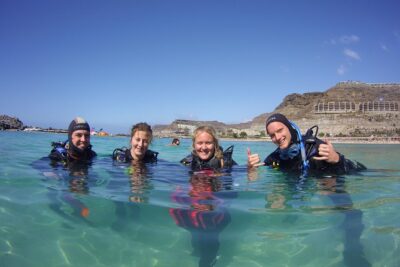
Scuba Diving Experience for Beginners in Gran Canaria
Read our review →
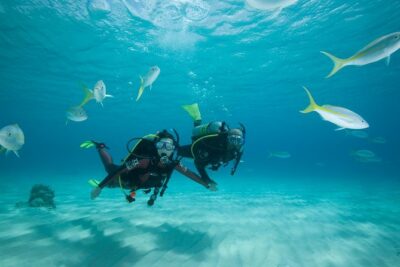
Beginners Scuba Diving Experience in Gran Canaria
Read our review →
Live an Adventure and Learn to Dive with Expert
Read our review →

Browse the lists this tour appears in