
Reviewed · GRAN CANARIA
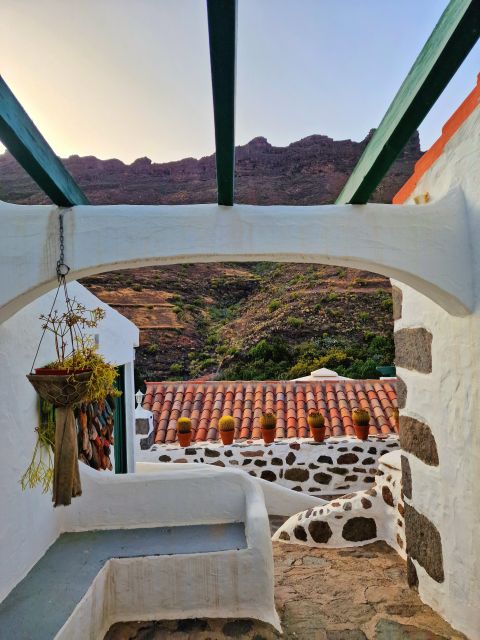
Gran Canaria historical house with mango plantation
A 200-year-old Canarian farmhouse, a cactus garden, and Gran Canaria’s first vermouth factory make this a small, pleasantly unusual outing near Mogán. You’ll see how mangoes, avocados, and soursops grow, then taste red and white Lolito vermouth with a cold mango dessert.
I like the small group of no more than 10 and the way the visit links architecture, farming, and local food instead of treating them as separate attractions. I also like the personal touch: guides such as Katarina, Katrina, and Tatiana are described as warm, friendly, and attentive, including arranging a non-alcoholic drink for a 13-year-old guest. The main drawback is the path down to the mango plantation, which is not suitable for baby carriages or people with mobility, heart, or blood-pressure problems.
Key points to know
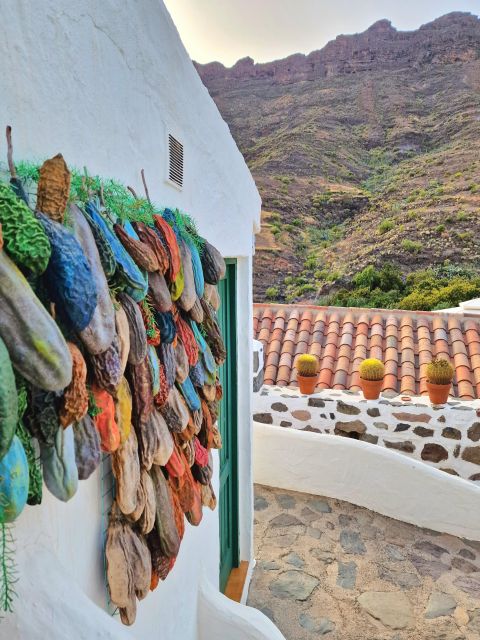
- A 200-year-old farmhouse: Explore a restored cluster of small buildings built in the style of traditional Canarian homes.
- A cactus garden with views: Follow picturesque paths through native plants above the Mogán valley.
- Fruit growing in practice: See mangoes, avocados, soursops, and cactus, with an explanation of their place in Canarian cooking.
- Gran Canaria vermouth: Taste both red and white Lolito, made at the farm’s vermouth factory.
- A memorable dessert: Try Gazpachuelo de mango, a cold mango and yogurt soup with chocolate cubes.
- A short, focused visit: The experience lasts about two hours and returns to the Valle de Mogán restaurant parking area.
Why this Mogán farmhouse visit is different
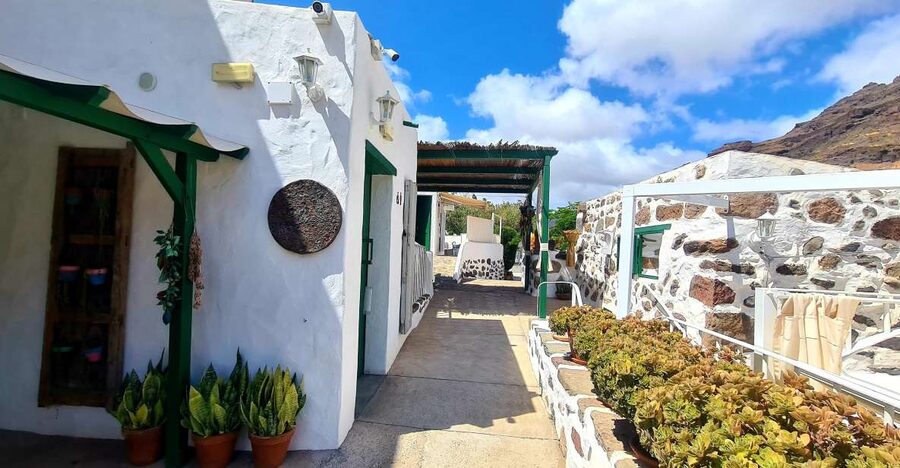
Gran Canaria is easy to reduce to beaches, hotel pools, and broad ocean views. This experience takes you inland, to Pueblo de Mogán, where the story is smaller and more grounded: old buildings, dry-climate plants, fruit trees, and a food producer working with ingredients from the surrounding area.
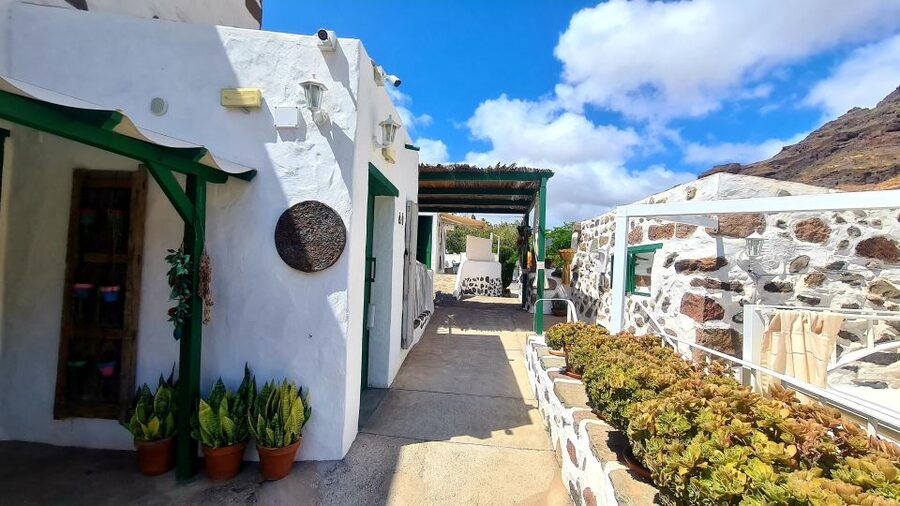
The farmhouse is not a single grand manor. It is a group of small buildings, restored according to traditional Canarian architecture. That matters because the appeal lies in the arrangement and setting, not in one spectacular room. You get a sense of how a working rural property was organized and how local building styles fit the island’s warm, dry conditions.
The setting also gives you fine views across the Mogán valley. I would come here expecting a guided cultural visit rather than a formal museum. The experience is strongest when you pay attention to the connections between the house, the plants, and the food served at the end.
More historic sites in Gran Canaria:
- Full-Day Tour Exploring History, Nature and Aloe Vera Farm
★ 4.5 · 40 reviews
Starting at Los Pasitos, 2
You meet at the parking area of the Valle de Mogán restaurant, listed as Los Pasitos, 2. Your guide wears a black jacket, which should make the meeting point easier to identify. Hotel pickup and drop-off are not included, so you need to arrange your own way to the restaurant parking area.
That detail is worth checking before you book. The activity is only two hours, and the schedule works best when you arrive ready to begin. The meeting point is also the end point, so you do not need to organize a second pickup elsewhere.
The group is limited to 10 people. That is a useful size for a visit involving a house, garden, plantation, and tastings. You should have a better chance to hear the guide and ask questions than you would on a large coach excursion.
Guiding is available in English, Spanish, and Russian. Named guides connected with the experience include Katarina, Katrina, and Tatiana. The descriptions of their approach point to a warm welcome and clear explanations, which matter in a short tour where the guide has to keep the visit moving without making it feel rushed.
Inside the restored Canarian farmhouse
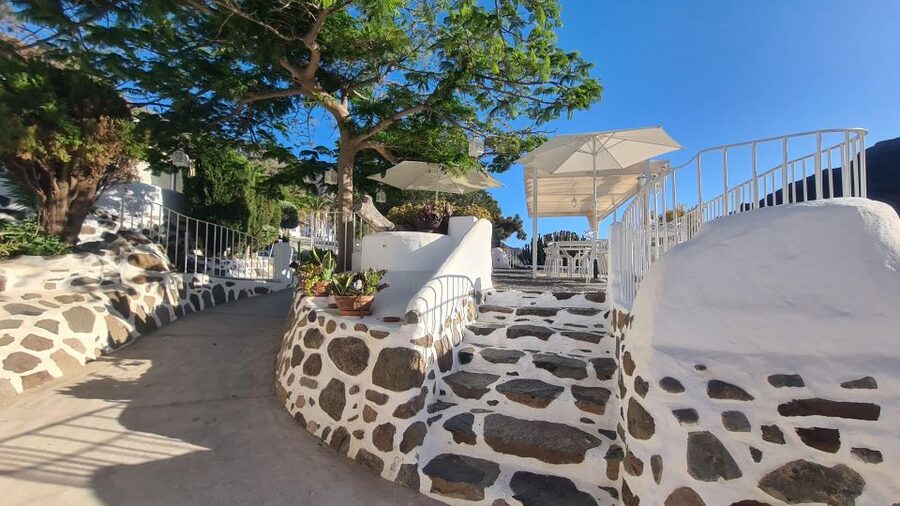
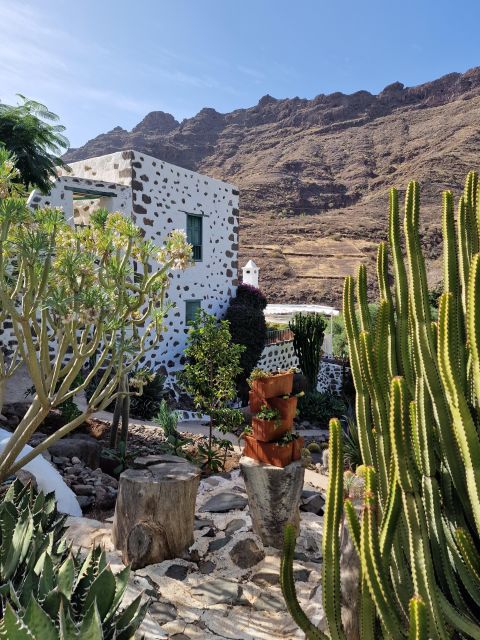
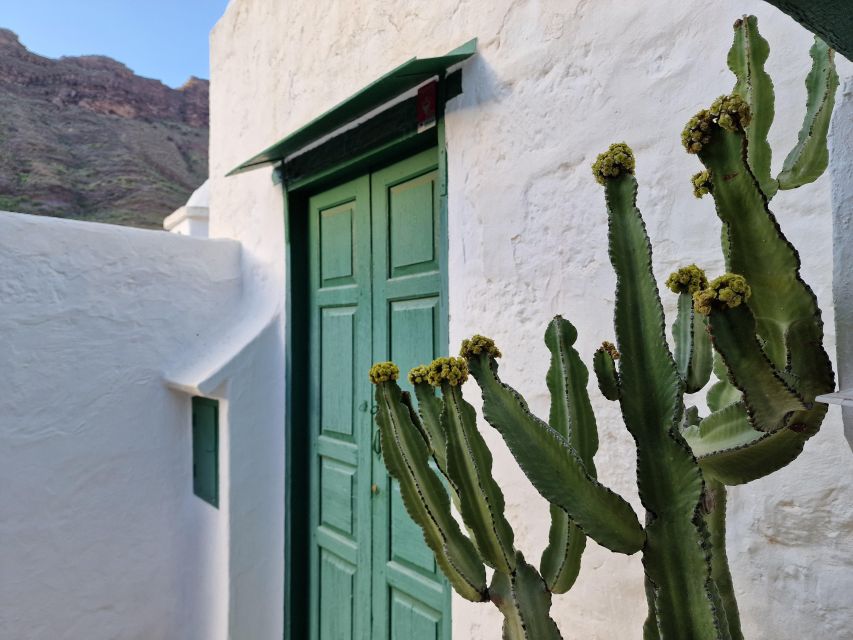
The first major stop is the historic farmhouse in the Mogán area. The buildings are about two centuries old and have been faithfully restored in the style of popular Canarian architecture.
Do not expect a large palace or a long museum circuit. The pleasure here is in seeing a rural property preserved as a group of modest buildings, surrounded by native vegetation. The house gives the rest of the visit a useful frame. Instead of simply tasting fruit and vermouth, you see those products in a place tied to farming and local life.
I like this kind of stop because it gives you context without requiring a full day. The visit is short enough for people who want something beyond the resort area but do not want to commit to a long excursion. The guide’s explanation is central, so listen for the details about how the buildings were used and how the architecture reflects the island.
The restored setting also makes a good contrast with the plantation. You move from built heritage to living crops, then on to a modern food product made on the property. That progression gives the two-hour visit a clear shape.
Walking the cactus garden
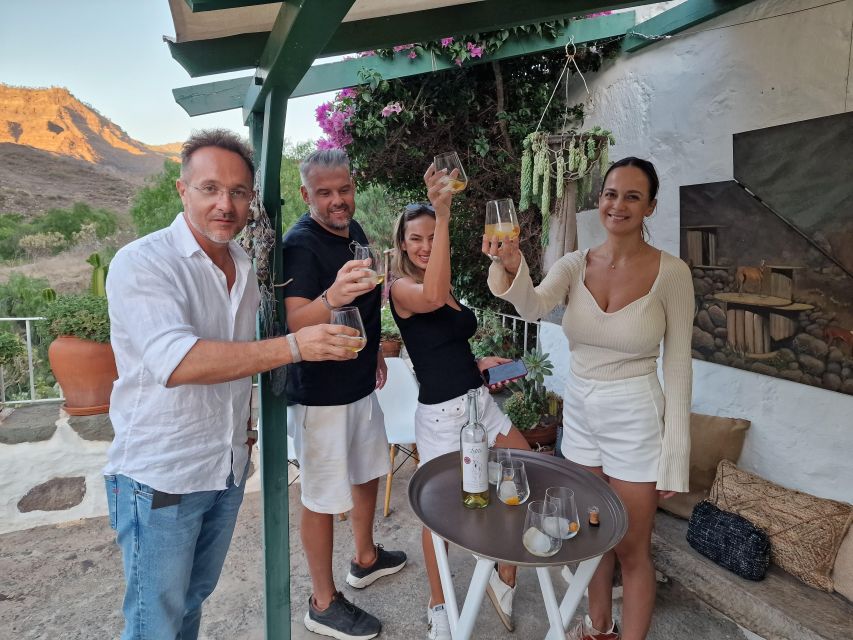
Next comes the cactus garden, with several types of plants and picturesque trails. Cactus is not just decoration here. The tour connects the plant to Canarian food, particularly the tunera, or prickly pear cactus.
You can expect a gentle garden visit with time to look around and take photographs. The garden is also part of the setting that makes the farmhouse interesting. Native vegetation and dry-climate planting help explain why the property looks and feels so different from a lush European garden.
The paths are one reason comfortable footwear is sensible. The supplied information does not describe the full surface or slope of every section, so you should not assume the garden is perfectly flat. The specific warning concerns the way down to the mango plantation, but anyone with mobility concerns should ask before booking.
This part will suit you if you enjoy plants but do not need a specialist botanical tour. The emphasis is on seeing the garden, understanding how cactus fits local life, and enjoying the views rather than identifying every species.
Same island, a completely different sort of day:
- Poema del Mar Skip-the-Line Ticket
★ 4.8 · 3,856 reviews - Puerto de Mogán: Submarine Tour
★ 4.4 · 3,792 reviews - Maspalomas: Guided Camel Ride in the Maspalomas Sand Dunes
★ 4.4 · 3,690 reviews - Guided tour of the Banana World
★ 5.0 · 3,431 reviews
Seeing mangoes, avocados, and soursops grow
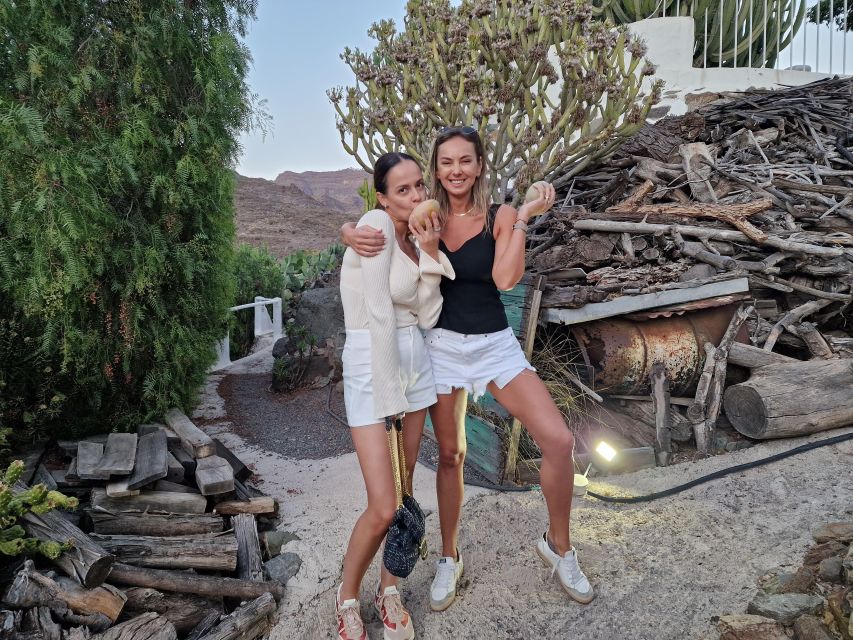
The plantation section adds a practical side to the experience. You see mangoes, avocados, and soursops growing, then hear how these fruits are used in Canarian cooking.
That explanation gives the fruit tasting more meaning. You are not just handed a sweet sample with no context. You have already seen the crops and heard how island cooks use them. Mango is especially important later, since it appears in the dessert called Gazpachuelo de mango.
The walk down to the plantation is the tour’s clearest limitation. It is not suitable for baby carriages or people with mobility impairments. The activity also advises against participation for people with heart problems, high blood pressure, or people over 95 years old. Take those warnings seriously, even if the total tour lasts only two hours.
The information provided does not give a precise distance or grade for the path. If you are unsure about your ability to manage it, contact the provider before reserving. Wheelchair accessibility is listed for the activity, but the plantation route itself is specifically excluded from that practical promise.
For visitors who can manage the walk, this is likely one of the most rewarding sections. You get a closer look at how fruit grows in the Mogán area and a better sense of the farm’s working character.
Tasting Lolito vermouth at the farm
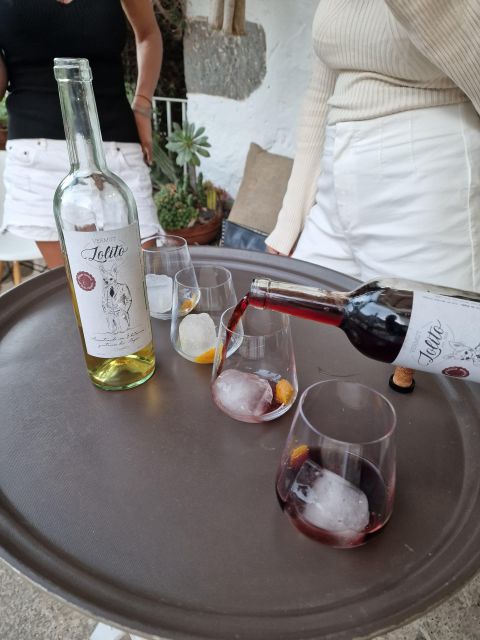
The final stop is the farm’s vermouth factory, where the property makes what it describes as the first vermouth in Gran Canaria. You taste both red and white Lolito vermouth.
This is a fun local specialty because it gives the visit a product that is specific to the farm, not simply a standard island drink served anywhere. The two styles also make the tasting more interesting. You can compare them rather than being handed one sample and moving on.
The included tasting is part of the basic experience, along with water. You do not need to purchase a separate tasting package to receive the vermouth or dessert. The visit includes both alcoholic options, so plan accordingly if you are driving or if you do not drink alcohol.
A useful family detail is that a non-alcoholic drink was prepared for a 13-year-old on one visit. That option is not formally listed as an inclusion, so do not assume it is guaranteed, but you can ask the provider in advance if someone in your group does not drink.
The tasting section lasts about 30 minutes in the stated schedule. That is enough time to try both vermouths and hear about the production, but it is not a long winery-style seminar. Come for the local flavor and the chance to compare two drinks, not for an intensive technical class.
Gazpachuelo de mango, the unusual finish
The included dessert is called Gazpachuelo de mango. It is described as a cold mango and yogurt soup with chocolate cubes.
The name may sound confusing at first, since gazpacho usually suggests a savory chilled soup. Here, the idea is sweet and fruit-based. Mango provides the main flavor, yogurt adds a cool, creamy element, and the chocolate cubes give the dessert a contrasting bite.
I like this ending because it uses the farm’s own fruit in a form you might not order every day. It also ties together the plantation and the tasting room. You have seen mangoes growing, heard about their use in Canarian cooking, and then tried a prepared dish based on the fruit.
The dessert is included in the $63 price. That makes the food portion feel more substantial than a simple sip of vermouth. It is still a tasting rather than a full meal, so do not arrive expecting lunch.
Optional food at Valle de Mogán
If you want to turn the visit into a longer food outing, you can add optional lunch or dinner at the Valle de Mogán restaurant. That meal is not included in the standard price.
The restaurant option may suit you if you prefer a complete half-day plan and want to continue with local dishes made from fresh ingredients. The basic visit remains a two-hour experience, so the optional meal gives you flexibility rather than forcing everyone into a longer schedule.
Because lunch or dinner costs extra, compare the total price before booking. The $63 standard rate covers the guide, water, farmhouse visit, garden and plantation visit, vermouth tasting, and mango dessert. It does not cover a full meal or transportation.
Is $63 a fair price?
At $63 per person, this is not the cheapest short attraction in Gran Canaria. The value depends on what you want from the visit.
For that price, you receive a private guide, a small group capped at 10, access to a restored historic property, a garden walk, a plantation visit, two vermouth tastings, water, and a distinctive dessert. The experience also joins several subjects in one compact outing: architecture, agriculture, local plants, and food production.
I think the price makes the most sense if you value personal guiding and small-scale places. A large sightseeing tour could show you more locations in a day, but it would not offer the same focus on one farmhouse and its products. If you are mainly looking for a long wine tasting or a full meal, this may feel expensive for two hours.
The tasting and dessert help strengthen the value. So does the fact that the experience returns to its starting point and does not take a full day. You are paying for a focused local visit, not transportation around the island.
Timing, comfort, and access
The activity lasts two hours, with starting times based on availability. The stated schedule allows about 75 minutes for the Mogán farmhouse, garden, plantation, views, and guiding, followed by about 30 minutes at the vermouth facility. The remaining time covers movement between parts of the visit.
The experience is listed as wheelchair accessible, but the plantation path is not suitable for people with mobility impairments. That distinction is important. If your access needs include the full route, ask for a clear explanation before booking.
It is also not recommended for people with heart problems, high blood pressure, or those over 95 years old. Baby carriages are not suitable for the way down to the plantation. Bring water if you need more than the included serving, and wear shoes suitable for garden paths and a plantation route.
Cancellation is flexible up to 24 hours before the start for a full refund. You can also reserve and pay later, which helps if your Gran Canaria plans are still shifting.
Who will enjoy this most?
I would recommend this to you if you want a short inland outing with a strong local-food angle. It suits couples, small families, and curious visitors who enjoy seeing how a place produces what it serves.
It is especially good for people who like a guide-led experience rather than wandering through a site alone. The explanations about architecture, cactus, fruit, and vermouth give the visit its value. The small group also makes it easier to ask questions.
Families should note that the alcoholic tasting is aimed at adults, though a non-alcoholic drink may be possible by arrangement. Anyone with limited mobility should think carefully about the plantation route and contact the provider before paying.
I would not choose this as your main island excursion if you want dramatic coastal scenery, a long hike, or a full restaurant meal included. The views are a pleasant part of the visit, but the focus is the farmhouse and farm production.
Should you book the Mogán farmhouse experience?
Book it if you want to spend two hours seeing a restored Canarian property, learning about local crops, and tasting a product made on site. The mix of the old farmhouse, cactus garden, mango plantation, Lolito vermouth, and Gazpachuelo de mango gives you more variety than the short duration suggests.
The strongest reasons to go are the small group, the personal guiding, and the direct link between what you see growing and what you taste. The main reason to skip it is the plantation access, especially if uneven or sloping paths are a concern.
At $63, I see it as good value for a focused cultural and food experience, not as a bargain sightseeing stop. If that balance suits you, reserve a time that fits your plans and arrive at the Valle de Mogán restaurant parking area ready for a small, hands-on look at inland Gran Canaria.
FAQ
Where does the experience start?
It starts at the parking area of the Valle de Mogán restaurant, at Los Pasitos, 2.
Where does the experience finish?
It finishes back at the same meeting point.
How long does the tour last?
The experience lasts two hours. Starting times depend on availability.
Is hotel pickup included?
No. Hotel pickup and drop-off are not included.
What languages are available?
Guiding is available in English, Spanish, and Russian.
How many people can join the group?
The group is limited to 10 participants.
What drinks are included?
The experience includes tastings of red and white Lolito vermouth, as well as water.
Is the mango dessert included?
Yes. The included dessert is Gazpachuelo de mango, a cold mango and yogurt soup with chocolate cubes.
Is lunch or dinner included?
No. Lunch or dinner at the Valle de Mogán restaurant is optional and costs extra.
Is the plantation route suitable for wheelchairs or baby carriages?
No. The way down to the mango plantation is not suitable for baby carriages or people with mobility impairments.
Just reviewed around Gran Canaria
- Custom Maspalomas Private Photo Shoot★ 5.0 · 7 reviews
- Sea and Mountain Full Day Tour with Lunch★ 4.0 · 5 reviews
- 6 Diving Sites Scuba Diving Package in Gran Canaria★ 5.0 · 6 reviews
- Kayak Gran Canaria★ 3.0 · 10 reviews
- Las Palmas Maspalomas Gran Canaria Salsa Lovers Dance Experience★ 5.0 · 3 reviews
- Las Palmas, Botanical Garden & Bandama Crater tour – Gran Canaria★ 4.5 · 27 reviews
- Holiday World Maspalomas Wooland Ticket★ 3.0 · 50 reviews
- Experience the Thrill of Jet Skiing in Anfi del Mar★ 4.5 · 13 reviews